

United Kingdom · Transitional

UK Transitional Housing: Government-Backed Rent, Freehold-Secured

Standard family houses in the North of England, refurbished and leased under a pass-through structure — sterling income with a CPI+1% uplift, maintenance paid from the gross claim, never by you. Lease terms are contracted per property, in writing, before you commit.

£127,500
Entry, from — freehold 3-bed semis
13–18%
Net yield band — stress-modelled
6wks
Typical reservation to income — fully remote
CPI+1%
Annual uplift — structural, not discretionary
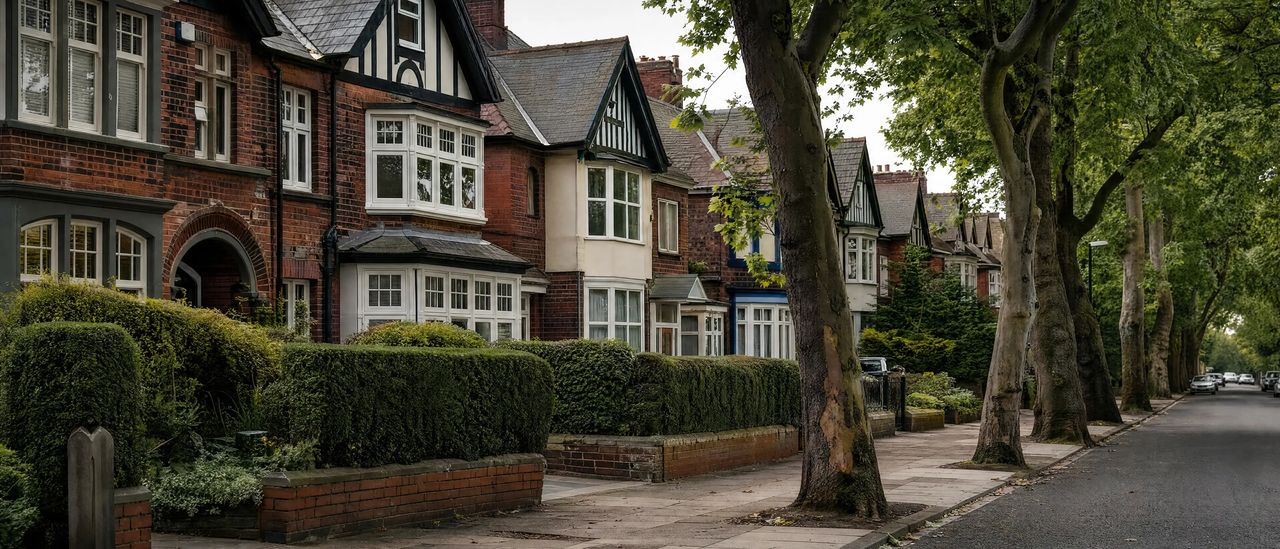
A street of semi-detached houses in northern England in morning light
Standard family houses, refurbished to the Decent Homes Standard — the corridors we buy in.
Why transitional housing

Demand That Follows a Statute, Not the Market

Transitional housing demand is disconnected from market cycles and consumer sentiment. Local authorities carry a statutory duty — and a chronic shortage of compliant homes to discharge it with.

Written into law

1.15M+ individuals on local-authority waiting lists; 274,000+ households councils are legally mandated to house under the Homelessness Reduction Act 2017 — your tenant demand is underwritten by an Act of Parliament, not a forecast.

A real house, not a paper promise

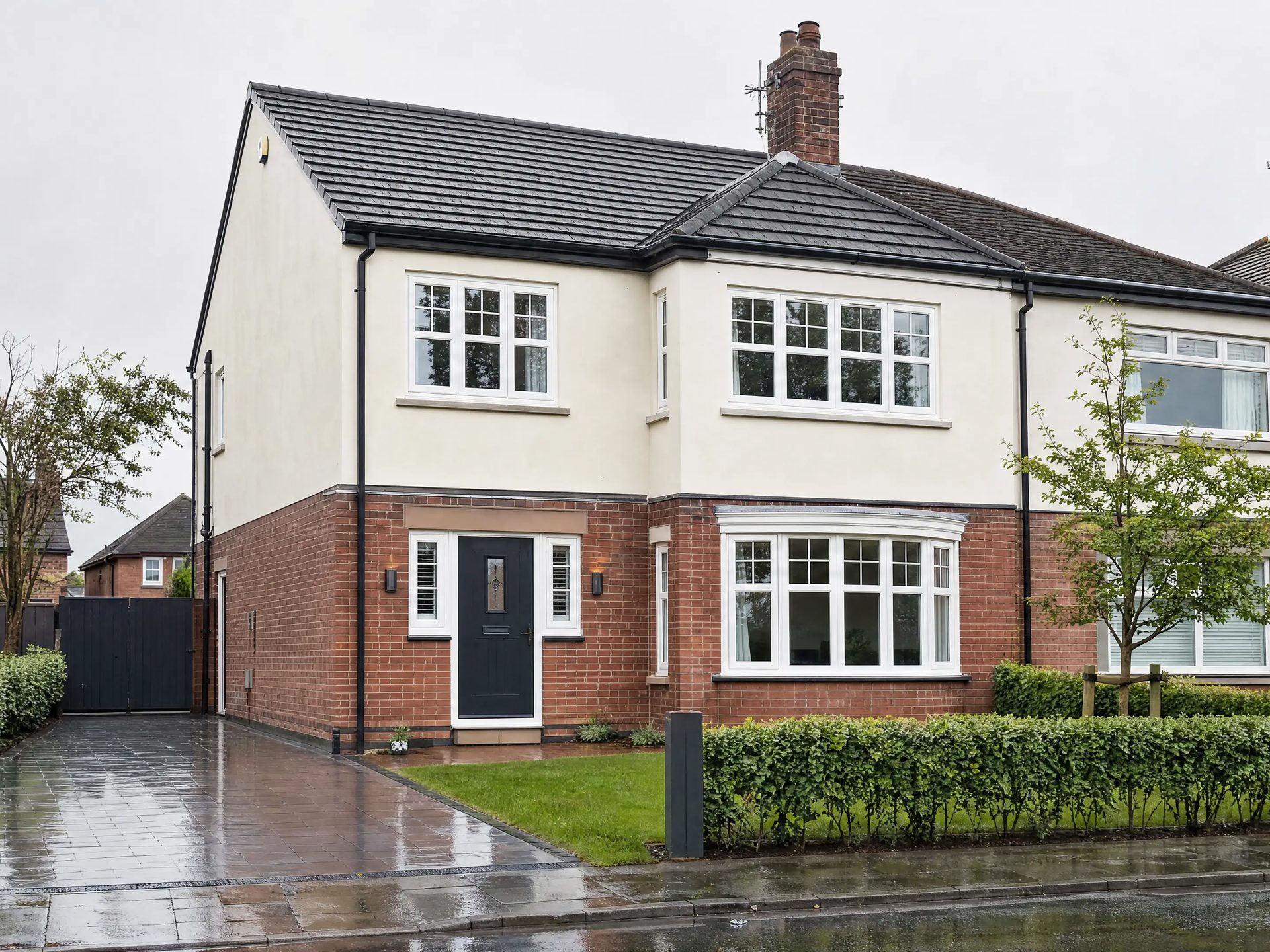
Typical asset: a three-bed semi in an established neighbourhood, refurbished to the UK Government’s Decent Homes Standard. Freehold title in your name at HM Land Registry — not a fraction, not a fund unit, not a REIT.

The service charge shield

All maintenance, utilities, tenant support and lifecycle repairs are deducted from the gross claim — never from you. Surplus builds toward a ~£9,300/yr sinking fund, and the operator’s fees are tied to occupancy: they earn when you earn.

CPI+1% inflation defence

Rent claims adjust with inflation structurally — not at anyone’s discretion. Sterling income from a reserve currency, on a freehold hard-asset floor in a supply-starved market.

Red-brick terraced housing in northern England at dusk
Northern England

Where We Buy — and Where We Refuse To

High yield is low entry price against standardized regional government rent. Three Northern corridors optimise both sides of that arithmetic.

North East

Middlesbrough · Newcastle · Stockton-on-Tees — the lowest entry prices in England against the same standardized rent bands.

North West

High-growth municipal zones between Liverpool, Manchester and Leeds, with deep statutory demand.

North Midlands

Core residential communities across Sheffield — established stock, refurbishment-led acquisition.

Not the South

London and the Home Counties carry inflated entry prices against the same standardized rents — collapsing net yields to 3–4%. We don’t buy where the arithmetic doesn’t work.

The money flow

The Pass-Through Waterfall

From the Treasury’s welfare budget to your ring-fenced account — a transparent, government-approved pass-through lease, engineered to avoid the rigid fixed-rent failures of older social housing models.

01
UK DWP / Universal Credit
Central welfare housing budget
02
Local authority
Pays enhanced gross rent claims
03
Registered provider
Signs the lease, claims the rent
04
Operating partner
Claims, compliance, placements
05
Your escrow
Ring-fenced, isolated from corporate liabilities
11,000+
Units managed by the operator
150+
Expert staff, 5 UK offices
£100M+
Group volume
24/7
Helpdesk, in-house compliance lawyers

Your property is run by the UK’s rescue operator — trusted by insolvency courts and administrators to stabilise failing municipal portfolios — and you receive one transparent monthly statement.

Case study

One Semi, Stress-Tested First

A single £176,486 three-bed semi, followed through the programme’s own structure — acquired, leased, shielded, then deliberately stress-tested at 48% occupancy. Income here moves with occupancy and that risk sits with you — so the bad year is modelled first; every figure below is the brochure’s arithmetic.

Acquired off-market

01

A three-bed semi-detached house secured for £176,486, off-market, at genuine municipal pricing — refurbished to the UK Government’s Decent Homes Standard before completion, with freehold registered in the owner’s name at HM Land Registry.

Leased under pass-through

02

A Registered Provider signs the lease and claims the rent from the local authority — with terms contracted per property, in writing, before you commit; this product carries no fixed headline term. The pass-through design re-claims against current government thresholds, avoiding the fixed-rent decay of older social models.

Shielded by structure

03

Maintenance, utilities, tenant support and lifecycle repairs come out of the gross claim. Service-charge surplus builds toward a ~£9,300/yr sinking fund, and the operator’s fees stay tied to occupancy — maintenance never knocks on your door.

Stress-tested first

04

Your income is not contracted — it moves with occupancy, so the bad year is modelled first. At 48% occupancy the same house still pays £1,404/mo — the scenario where the maths still breaks even at 10% net. At the 70% target it pays £2,153/mo; the operator’s fees fall with yours, and the partner’s wider portfolio runs at 99% historical organic occupancy.
10–18%
The full band, bad year included — 10% net at the 48% occupancy stress case, 15% at the 70% target, 18% optimized. Occupancy risk sits with you, the owner.
A refurbished three-bedroom semi-detached house in northern England

The modelled asset — a refurbished three-bed semi in the Northern corridors. Illustrative.

“Maintenance never knocks on your door.” The service charge shield · lease terms

The £176,486 semi under three occupancy scenarios — illustrative projections.
LineSevere stressTargetedOptimized
Occupancy48%70%85%
Gross monthly claim£2,236£3,261£3,960
Service & management−£832−£1,108−£1,296
Net monthly to you£1,404£2,153£2,664
Net yield10%15%18%

Scenarios are illustrative projections for a representative £176,486 acquisition. Yields depend on occupancy, claim levels and cost outturns; property-specific figures are confirmed in writing before reservation. The partner’s 99% historical organic occupancy is not a guarantee of future placement. Past performance is not a guarantee of future returns. Property values and rental income can fall as well as rise. Global Investments Inc. Ltd provides international property advisory services and is not regulated by the UK FCA.

The tool

Model Your Own Income

Three dials — entry price, target net yield and the CPI+1% uplift — compounded across a 25-year hold: an illustrative horizon, not a lease term. The maths is the brochure’s maths.

Purchase price£127,500

Programme entry: from £127,500, freehold 3-bed semis, Decent Homes Standard.

Target net yield · Year 114.0%

Stress-modelled band 13–18% — confirmed in writing per property, before reservation.

Annual uplift · CPI+1%4.0%

Structural, not discretionary — claims adjust with inflation every year of the lease.

Fixed in the maths — maintenance, utilities and lifecycle repairs from the gross claim, never from you · sinking-fund target ~£9,300 / yr · income into a ring-fenced escrow · cash purchase only.

Net income · Year 1
£17,850/ yr
≈ £1,488 a month
Capital repaid by income in
6.4years
cumulative net income covers the purchase price — the house stays yours
Final year · monthly
£3,813
Year 25, after CPI+1% compounding
Total · 25-year hold
£743,400
cumulative net income across the hold
Of purchase price
583%
total net income ÷ entry price — before any capital growth
Uplift mechanism
CPI+1%
structural — compounds every year of the lease
0510152025 yrs

Gold: cumulative net income, compounding at the CPI+1% uplift. Dashed: your purchase price. The dot is the year income has repaid it — every year after, and the house itself, remain yours. 25 years is an illustrative hold horizon, not a lease term; capital growth is not modelled.

Illustrative tool, not investment advice. Net yield is property-specific within the stress-modelled 13–18% band; the CPI+1% uplift is index-dependent and currency movements go both ways. The product carries no fixed headline lease term — lease terms are contracted per property. Cash purchase only. Past performance is not a guarantee of future returns. Property values and rental income can fall as well as rise. Global Investments Inc. Ltd provides international property advisory services and is not regulated by the UK FCA.

Questions

Asked Before You Ask

How is this different from social housing?

Older social models fix the rent and let it decay in real terms. The pass-through lease re-claims against current government thresholds, with a CPI+1% structural uplift every year — and maintenance sits behind the service charge shield, not with you.

Who lives in the house?

Households local authorities are legally mandated to house under the Homelessness Reduction Act — placed and supported by the provider. Occupant care is the operator’s professional duty, never the owner’s burden.

What happens if occupancy falls?

Unlike our social housing product, income here is not contracted — it moves with occupancy, and that risk sits with you. The programme is stress-modelled, not guaranteed: at 48% occupancy the representative asset still breaks even at 10% net. The operator’s fees fall with yours, the partner’s wider portfolio runs at 99% historical organic occupancy, and property-specific figures are confirmed in writing before reservation.

How do I exit?

You own a standard family house, freehold — sellable on the open market to ordinary buyers at any time. Global’s resale desk (70,000+ investor database) can also find the next income buyer.

Net yield band is stress-modelled, not guaranteed. Figures are illustrative of the current UK transitional programme. Past performance is not a guarantee of future returns. Property values and rental income can fall as well as rise. Global Investments Inc. Ltd provides international property advisory services and is not regulated by the UK FCA.

Next step

A Financial Fortress, Built of Ordinary Bricks

Tell us your budget — we’ll model the current Northern off-market list and send property-specific figures before anything goes public.

Talk to a UK specialist